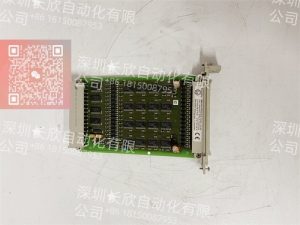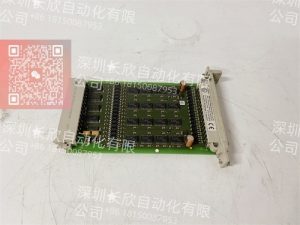
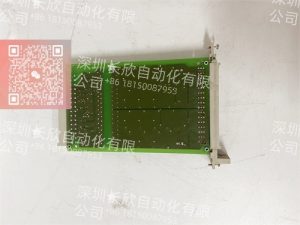
HIMA Part Number F3322 | Digital Input Module for Process Safety
In the realm of industrial automation, process safety is paramount, especially in high-risk environments such as chemical plants, oil refineries, and power generation facilities. The HIMA Part Number F3322 digital input module stands as a critical component in safeguarding these operations by providing reliable and secure digital input signals for safety instrumented systems (SIS). This article delves into the technical specifications, application scenarios, and real-world benefits of the F3322 module, offering insights for engineers and safety professionals.
1. Core Features: Reliability and Safety Integrated
1.1 Modular Design for Flexibility
The F3322 module adopts a modular design, allowing for easy expansion and configuration based on specific project requirements. This flexibility enables engineers to tailor the system to varying input needs, whether in a small-scale chemical facility or a large-scale oil refinery. The module supports multiple digital input channels, each independently configurable to handle different signal types, such as contact closures or voltage inputs. This adaptability ensures seamless integration into existing safety systems without requiring extensive modifications.
1.2 High Reliability Through Redundancy and Isolation
Redundancy is a cornerstone of the F3322’s design. Each digital input channel is equipped with redundant circuitry, ensuring continuous operation even if a single component fails. Additionally, the module features isolation between channels, preventing signal interference and fault propagation. This isolation is critical in environments where electrical noise or transient voltages could compromise signal integrity. For instance, in a petrochemical plant, where high-voltage equipment and motors generate significant electromagnetic interference, the F3322’s isolation ensures accurate signal detection and prevents false triggers.
1.3 Compliance with International Safety Standards
The F3322 module is designed to meet stringent international safety standards, including IEC 61508. which governs functional safety for electrical/electronic/programmable electronic safety-related systems. Compliance with these standards ensures that the module can be used in safety-critical applications where failure could lead to catastrophic consequences. The module also incorporates diagnostic functions, such as continuous self-monitoring and fault detection, which enhance system reliability and reduce downtime.
2. Technical Specifications: Detailed Performance Metrics
2.1 Input Characteristics
The F3322 module supports digital input signals with a wide range of voltage levels, typically from 24 VDC to 230 VAC. This broad voltage range allows the module to interface with diverse industrial equipment, including sensors, switches, and control devices. The input impedance is designed to minimize signal attenuation, ensuring accurate signal detection even over long distances.
2.2 Output Characteristics
While primarily a digital input module, the F3322 also offers digital output capabilities, though this feature is not its primary focus. The output signals are typically transistor-based, with options for open-collector or push-pull configurations. These outputs are used to control external devices, such as actuators or alarms, based on the input signals received.
2.3 Environmental and Physical Specifications
The module operates reliably in harsh industrial environments, with a temperature range of -25°C to +70°C and a humidity range of 5% to 95% relative humidity. Its compact dimensions (2.5 x 12.7 x 20.3 cm) and lightweight design (approximately 200 grams) facilitate easy installation and integration into control panels or distributed systems.
3. Application Scenarios: Real-World Use Cases
3.1 Chemical Plant Safety System
In a large chemical plant, the F3322 module was integrated into the safety instrumented system to monitor critical process parameters, such as pressure and temperature. The module’s redundant input channels ensured continuous monitoring, even during maintenance activities. The plant reported a significant reduction in unplanned shutdowns, attributed to the module’s reliable signal detection and fault isolation capabilities.
3.2 Oil Refinery Emergency Shutdown System
An oil refinery implemented the F3322 module in its emergency shutdown system (ESD) to detect hazardous conditions, such as gas leaks or pressure surges. The module’s fast response time and high accuracy in signal detection enabled the system to initiate shutdown procedures promptly, preventing potential accidents. The refinery’s safety officer noted that the module’s compliance with international safety standards provided confidence in its reliability.
4. User Feedback and Expert Insights
4.1 User Testimonials
A maintenance engineer from a chemical plant praised the F3322 module for its ease of installation and minimal downtime during maintenance. “The modular design allows us to replace individual channels without affecting the entire system,” he said. Another user from an oil refinery highlighted the module’s robustness in extreme temperatures, stating, “It performs flawlessly even in our desert location where temperatures exceed 50°C.”
4.2 Expert Recommendations
Safety experts recommend the F3322 module for applications requiring high reliability and compliance with international safety standards. They emphasize the importance of regular maintenance, including periodic checks of input signals and output responses, to ensure long-term performance. Additionally, experts advise integrating the module with advanced diagnostic tools for predictive maintenance, further enhancing system reliability.
5. Conclusion: A Trusted Solution for Process Safety
The HIMA Part Number F3322 digital input module is a robust and reliable solution for process safety applications. Its modular design, redundancy, and compliance with international safety standards make it an ideal choice for industries where safety is non-negotiable. Real-world applications in chemical plants and oil refineries demonstrate its effectiveness in preventing accidents and ensuring operational continuity. As industrial safety requirements continue to evolve, the F3322 module remains a trusted partner in safeguarding critical processes.