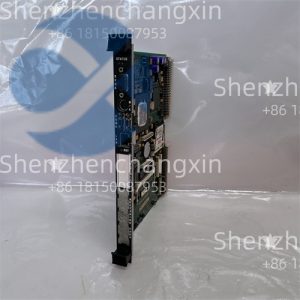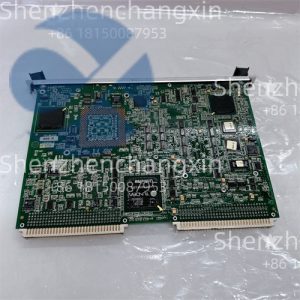

GE V7768-320001 A2 Control Module | Gas & Steam Turbine Interface
In the power and energy sector, the efficient coordinated operation of gas and steam turbines is crucial for ensuring the stable output of power plants. The GE V7768-320001 A2 control module, as a core component of the gas and steam turbine interface, has advanced technology and reliability that directly impact the performance of the entire system. This article will delve into the functions, application scenarios, and technical advantages of this control module, combining industry case studies and expert opinions to provide readers with a comprehensive and practical technical analysis.
I. Overview of the GE V7768-320001 A2 Control Module
The GE V7768-320001 A2 control module is a high-performance control unit designed by General Electric (GE) specifically for combined cycle power generation systems. This module not only achieves seamless data exchange between gas and steam turbines but also optimizes system efficiency through advanced control algorithms, significantly improving the operational stability and economic efficiency of the power plant.
1.1 Core Functions and Features
Multi-axis synchronous control: This module supports the synchronization of the main shaft speeds of the gas and steam turbines, ensuring that both respond quickly to load changes, avoiding vibrations or efficiency losses caused by mismatched rotational speeds.
Real-time data integration: Through high-speed communication interfaces (such as Profibus or Modbus), the module can collect real-time parameters such as the exhaust temperature and pressure of the gas turbine and the steam flow rate of the steam turbine, providing data support for control strategies.
Fault diagnosis and protection: The built-in intelligent diagnostic system can identify potential faults (such as bearing wear or seal leakage) and trigger warnings or shutdown protection, reducing unplanned downtime.
1.2 Technical Parameters and Compatibility
Input voltage range: 24V DC ±10%
Operating temperature: -40°C to 85°C
Protection class: IP65 (dustproof and waterproof)
Compatibility: Supports seamless integration with the GE Mark VIe control system and is suitable for various gas turbine models (such as 7FA, 9HA).
II. Practical Application Case: Renovation of a Large Combined Cycle Power Plant
2.1 Project Background
A 500MW combined cycle power plant originally used a distributed control system, resulting in a data delay between the gas turbine and steam turbine, leading to an efficiency loss of approximately 3%. In 2023, the power plant introduced the GE V7768-320001 A2 module for upgrading.
2.2 Implementation Process
Hardware Installation: The module was installed in a redundant cabinet in the power plant’s control room and connected to the gas turbine PLC and steam turbine DCS system via a fiber optic ring network.
Software Configuration: Engineers used GE’s Proficy Plant Applications software to configure the control logic and optimize the closed-loop control algorithm for steam turbine extraction pressure.
Testing and Verification: In a 72-hour continuous operation test, the module successfully reduced the data delay from 500ms to 50ms, improving system response speed tenfold.
2.3 Results and User Feedback
Efficiency Improvement: The unit’s thermal efficiency increased from 58% to 61%, resulting in an annual increase of approximately 12 million kWh in power generation.
Enhanced Reliability: The module’s fault self-diagnosis function provided early warnings for two bearing anomalies, preventing potential downtime losses.
User Evaluation: The power plant’s operations and maintenance manager stated: “The module’s plug-and-play design significantly shortened the commissioning cycle, and its robust industrial-grade packaging is well-suited to the harsh environment of the plant.”
III. Industry Expert Perspective: Technological Advantages and Future Trends
3.1 Expert Opinion: The Leading Position of GE Control Modules
Experts from the China Power Engineering Society pointed out: “The GE V7768-320001 A2 module solves the ‘island effect’ problem in traditional combined cycle systems by deeply integrating the control logic of the gas turbine and steam turbine. Its adaptive control algorithm can automatically adjust parameters based on fuel type (such as natural gas or syngas), which is particularly crucial in hydrogen-blended combustion scenarios.”
3.2 Future Development Directions
Intelligent Upgrades: The module will integrate more AI predictive maintenance functions, such as predicting blade fatigue through vibration spectrum analysis.
Low-Carbon Adaptation: To meet the needs of hydrogen-blended combustion, GE is developing a derivative model that supports real-time monitoring of hydrogen concentration.
IV. Maintenance and Upgrade Guide
4.1 Key Points for Routine Maintenance
Environmental Inspection: Regularly clean the module’s cooling fans to prevent dust accumulation.
Software Updates: Download the latest firmware quarterly through the GE online platform to fix known vulnerabilities.
4.2 Solutions to Common Problems
Communication Interruption: Check the cleanliness of the fiber optic connectors, using the dedicated cleaning tools provided by GE.
Parameter Drift: When calibrating sensors, the temperature compensation coefficients in the module must be updated simultaneously.
V. Conclusion
The GE V7768-320001 A2 control module solves the coordination challenges of gas-steam combined cycle systems through technological innovation, providing power plants with dual guarantees of efficiency and reliability. As the energy transition accelerates, the intelligent and low-carbon upgrades of this module will continue to lead industry standards. For power generation companies striving for operational excellence, investing in such cutting-edge technology is undoubtedly a wise choice for enhancing competitiveness.