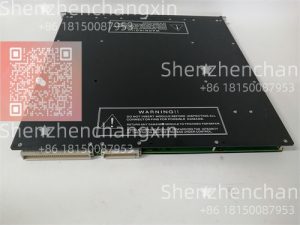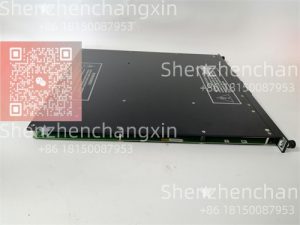

TRICON 4000094-310 Hot-Swappable TMR CPU with Built-in Diagnostic Functions: A Core Innovation in Industrial Control
In industrial automation and safety-critical applications, system reliability is a core element in ensuring continuous production and avoiding downtime losses. The TRICON 4000094-310, a hot-swappable Triple Modular Redundancy (TMR) CPU designed for demanding environments, provides industrial control systems with unprecedented fault tolerance and real-time fault detection mechanisms through its built-in diagnostic functions. This article will delve into its technical principles, application scenarios, and industry value, combining real-world cases and expert insights to reveal its critical role in modern industry.
I. TMR Architecture: The Foundation of Fault Tolerance through Triple Redundancy
The core advantage of the TRICON 4000094-310 lies in its TMR architecture, which implements a “two-out-of-three” voting mechanism through three independently operating CPU modules. Each module independently executes the control program and performs real-time data comparison using dedicated hardware/software. When one module fails, the other two modules can immediately take over control, ensuring uninterrupted system operation. For example, in the petrochemical industry, TMR CPUs are used in emergency shutdown systems (ESD). Even if a single module fails due to electromagnetic interference or hardware aging, the system can still maintain a safe state, preventing production accidents.
The reliability of this architecture stems from its dynamic fault coverage capabilities. The diagnostic unit continuously monitors the operating status of each module, including voltage fluctuations, temperature anomalies, or signal distortion. Once a deviation is detected, the system triggers an internal voting mechanism, automatically isolating the faulty module and reassigning tasks. Users can restore full functionality by replacing the module online without downtime, significantly improving production efficiency.
II. Built-in Diagnostic Functions: Real-time Monitoring and Preventive Maintenance
The built-in diagnostic function of the TRICON 4000094-310 is another major highlight. The system integrates multi-level detection mechanisms covering hardware health status, communication link integrity, and software logic consistency. For example, in power substation automation systems, the diagnostic unit can analyze the CPU’s clock frequency, memory usage, and I/O signal quality in real time. If data packet loss or voltage overruns are detected, the system immediately generates a fault log and sends an alert to the operator via the HMI interface. Preventive maintenance is the core value of built-in diagnostics. Through historical data analysis, the system can predict potential failure points, such as capacitor aging or poor heat dissipation. A case study from an automobile manufacturer shows that this function helped identify ventilation failures in the control cabinet in advance, avoiding unexpected downtime due to overheating. In addition, diagnostic data supports remote monitoring, allowing engineers to assess system health in real time via a cloud platform and develop precise maintenance plans.
III. Hot-Swappable Design: A Key to Enhanced System Availability
The hot-swappable feature allows the TRICON 4000094-310 to be maintained without shutting down the entire system. The modular design allows operators to replace faulty components while the system is running, with other modules continuing to perform control tasks. This feature is especially important in continuous production scenarios, such as bottling lines in the food and beverage industry. Traditional systems require several hours of downtime to replace a CPU, while the TRICON solution reduces maintenance time to minutes, reducing annual downtime by up to 90%.
Hot-swapping is achieved through intelligent power management and signal isolation technology. During the hot-swapping process, the system automatically adjusts load distribution to prevent current surges from damaging components. User feedback indicates that this design significantly reduces maintenance costs while improving the overall availability of the production line.
IV. Industry Applications and User Feedback
The TRICON 4000094-310 has been widely used in the energy, chemical, and transportation sectors. In wind power plants, the TMR CPU ensures stable operation of wind turbines in extreme weather conditions, and the built-in diagnostic function provides early warning of bearing wear, avoiding costly major repairs. Chemical companies utilize its hot-swappable capabilities to quickly replace moisture-damaged modules in corrosive environments, ensuring production safety.
User feedback consistently emphasizes its “zero downtime” advantage. A maintenance supervisor at a steel plant noted, “The TRICON system has enabled us to achieve true preventive maintenance, reducing fault response time by 70%.” Experts recommend optimizing module configuration based on specific load requirements during deployment, such as strengthening heat dissipation design in high-vibration environments.
V. Future Outlook: A Reliable Partner for Industry 4.0
As Industry 4.0 progresses, the TRICON 4000094-310’s TMR architecture and diagnostic functions will be more closely integrated into the smart factory ecosystem. Its combination with edge computing and AI predictive models is expected to enable more accurate fault prediction and adaptive control. For example, in smart grids, the system can optimize redundancy strategies by learning from historical data, further improving energy efficiency.
In summary, the TRICON 4000094-310 redefines reliability standards for industrial control through triple redundancy, real-time diagnostics, and hot-swappable design. It not only solves the single-point failure problem of traditional systems but also provides a solid foundation for preventive maintenance and intelligent upgrades, becoming a key component in driving industrial digital transformation.