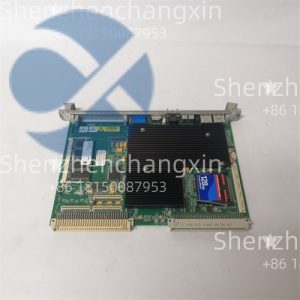
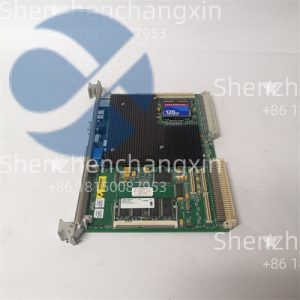
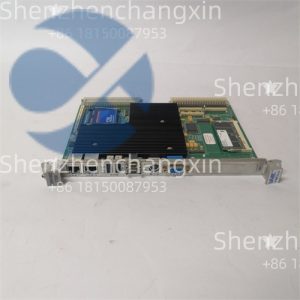
Application Scenarios
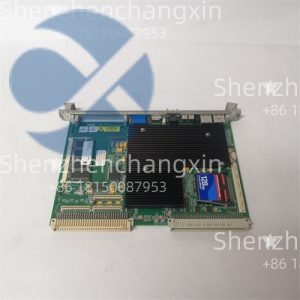
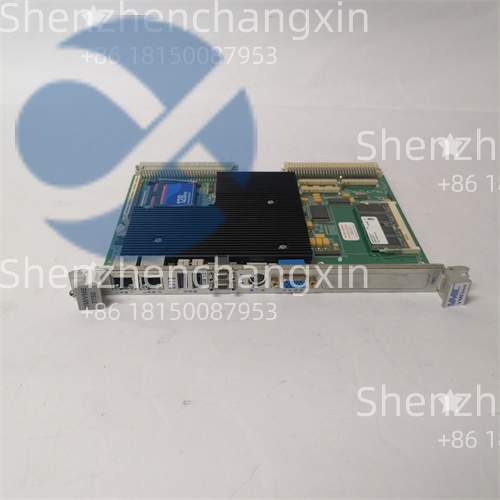
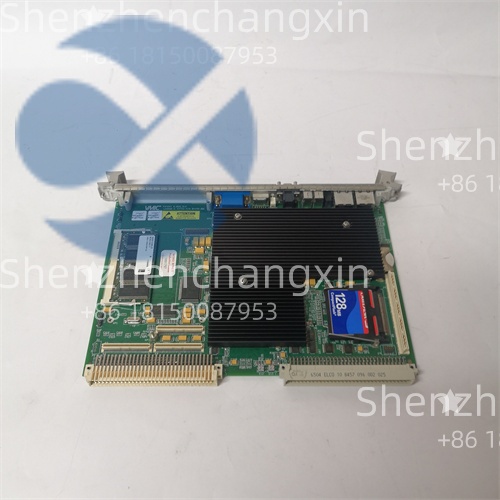
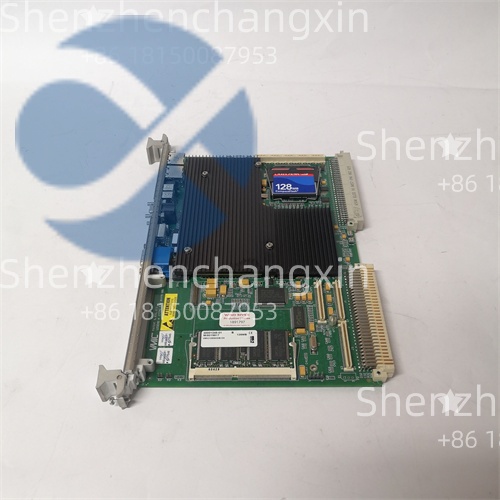
In a naval sonar processing system deployed on a U.S.Navy frigate,two Motorola PowerPC-based VME single-board computers(SBCs)needed to share beamforming results with sub-millisecond latency.Ethernet introduced jitter;reflective memory was too costly.Engineers selected the GE VMIVME-7452 as a shared memory“blackboard.”One SBC wrote processed acoustic vectors into the 512 KB SRAM space,while the second read them via hardware semaphores to trigger classification algorithms.The result:deterministic 8µs data handoff,zero packet loss,and full determinism under EMI-heavy conditions.Over a 10-year service life,not a single VMIVME-7452 failed—proving that sometimes,the simplest interconnect is the most resilient.
Parameter
Main Parameters Value/Description
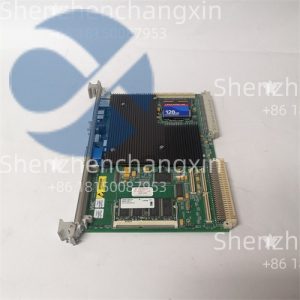
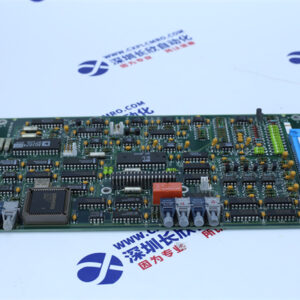
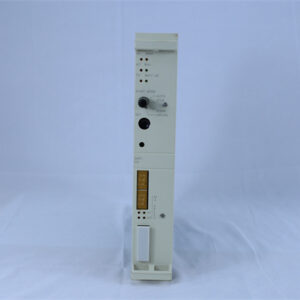
Product Model VMIVME-7452
Manufacturer GE Intelligent Platforms(now Emerson)
Bus Interface VME64(IEEE 1014),32-bit,supports A24(24-bit)and A32(32-bit)addressing
Memory Capacity 128 KB or 512 KB dual-port SRAM(configurable via jumpers or software)
Access Time≤25 ns SRAM access;bus cycle time as low as 100 ns
Port Configuration Two independent VMEbus ports(Port A and Port B)
Semaphore Support 16 hardware semaphores for atomic lock/unlock operations
Data Width 32-bit(longword)transfers supported
Interrupt Capability Programmable interrupt generation on memory write or semaphore event
Form Factor 6U VME(233.35 mm×160 mm),front-panel I/O optional
Operating Temperature Commercial:0°C to+70°C;Extended/Rugged variants available
Compliance VITA 1.1(VME64),RoHS(depending on revision)
Technical Principles and Innovative Values
Innovation Point 1:True Hardware-Level Concurrency
The VMIVME-7452 uses true dual-port SRAM—not bank-switched or time-multiplexed memory—allowing both VME masters to read/write any address simultaneously without arbitration delay.
Innovation Point 2:Atomic Semaphore Logic for Safe IPC
Built-in 16-bit semaphore register ensures thread-safe access:if CPU A locks semaphore 3,CPU B is blocked until released—eliminating race conditions in real-time code.
Innovation Point 3:Zero-OS Overhead Communication
Unlike TCP/IP or even shared-memory drivers over PCIe,the VMIVME-7452 requires no OS kernel involvement—data appears as local memory-mapped I/O,ideal for VxWorks,LynxOS,or bare-metal DSPs.
Innovation Point 4:Legacy System Sustainment
As VME systems age,the VMIVME-7452 remains a critical enabler for extending the life of million-dollar radar,flight simulators,and test rigs where full migration is cost-prohibitive.
Application Cases and Industry Value
At an aerospace test facility in Arizona,a legacy flight control simulator used three VME chassis to emulate aircraft avionics.Data synchronization between pitch/yaw/roll processors relied on slow serial links,causing simulation lag.By installing VMIVME-7452 modules in each chassis and daisy-chaining them via custom backplane extensions,engineers created a unified 1.5 MB shared memory space.All processors now updated state vectors at 1 kHz with<10µs skew.The simulator passed FAA recertification with flying colors—and avoided a$4M rewrite.The VMIVME-7452 didn’t just upgrade performance;it preserved institutional knowledge embedded in decades-old code.
Related Product Combination Solutions
GE VMIVME-7750:Quad Tundra Tsi148 VME-to-VME bridge–for multi-chassis VMIVME-7452 expansion
GE SBS GVC711:PowerPC VME SBC–native support for dual-port RAM programming
Curtiss-Wright VPX3-133:Modern VPX dual-port memory module–for VME-to-VPX migration paths
GE VMIVME-7807:Reflective Memory module–higher bandwidth alternative for large datasets
Motorola MVME5500:Classic PowerPC VME board–commonly paired with VMIVME-7452 in defense apps
Wind River VxWorks BSP:Board Support Package with dual-port RAM drivers for VMIVME-7452
GE VMIVME-7442:Older 64 KB dual-port RAM–predecessor to 7452
Emerson ControlEdge PAC:Modern PLC platform–not directly compatible,but useful for hybrid retrofits