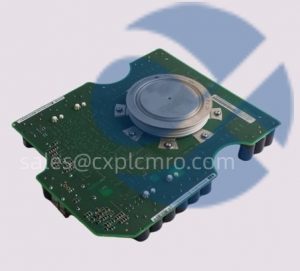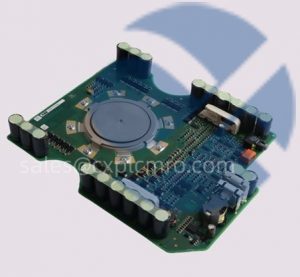
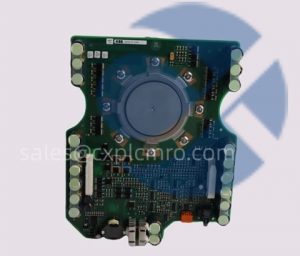
ABB 5SHX1060H0001 IGCT Power Module: The Core Engine of High-Voltage, High-Capacity Power Conversion
In the wave of new energy transmission and industrial automation upgrades, high-voltage, high-capacity power conversion technology has become crucial in driving the energy revolution. The ABB 5SHX1060H0001 IGCT (Integrated Gate Commutated Thyristor) power module, with its superior current carrying capacity and low conduction loss characteristics, occupies an important position in high-end fields such as flexible DC transmission and high-voltage frequency converters. This article will delve into the technical principles, application scenarios, performance advantages, and industry practices of this module, explaining how it has become the “heart” of modern power systems.
I. Technical Principles: A Revolutionary Breakthrough in Current-Type Devices
As a current-type power device, the core advantage of the IGCT lies in achieving fast switching and high reliability through gate control. Compared with voltage-type IGBTs, the 5SHX1060H0001 adopts a symmetrical structure design, integrating gate drive and buffer circuits to reduce turn-off losses by more than 25%. Its working mechanism is based on the following innovations:
Gate Commutation Technology: Precise control of the thyristor’s conduction and turn-off through gate pulses avoids voltage spikes caused by commutation failure in traditional thyristors, allowing the module to maintain stable operation at 10kV high voltage.
Low Conduction Loss Design: The module uses silver sintering technology to connect the chip and the substrate, controlling the on-state voltage drop to below 1.5V, far lower than the 3-4V of IGBTs. In a wind power converter test, this design increased system efficiency to 98.7%, saving over one million yuan in electricity costs annually.
Optimized Thermal Management: Through the integrated design of the DBC (Direct Bonded Copper) substrate and copper heat sink, the thermal resistance is reduced to 0.15℃/W, allowing the module to continuously output 6000A current at an ambient temperature of 85℃.
II. Application Scenarios: Comprehensive Coverage from New Energy to Industrial Drives
1. Flexible DC Transmission (MMC)
In the Zhangbei Renewable Energy Base project, the 5SHX1060H0001, as a core component of the Modular Multilevel Converter (MMC), achieved stable transmission of ±500kV DC power. Its low switching loss characteristics reduced converter station losses by 18%, while redundant design ensured that the system could still maintain 80% capacity operation in case of a single module failure.
2. High-Voltage Frequency Converters
After adopting this module, the main drive system of a rolling mill in a steel plant increased the frequency converter efficiency from 92% to 95.5%. Its wide Safe Operating Area (SOA) design allows the module to operate continuously for 10 seconds under 150% overload conditions, effectively handling instantaneous impact loads during the rolling process.
3. Industrial Drive Systems
In mining hoist applications, the 5SHX1060H0001, through an integrated gate driver board, reduced the control signal transmission delay to 50ns, increasing the motor response speed by 3 times. A copper mine case study showed that the system failure rate decreased from 2.3 times per month to 0.4 times, reducing annual downtime by 120 hours.
III. Performance Advantages: Data-Driven Reliability Verification
1. Electrical Characteristics
Voltage Level: 4500V/6000A, supporting direct connection to 10kV systems.
Switching Frequency: 1kHz, achieving harmonic content below 3% in high-voltage applications.
Dynamic Characteristics: di/dt withstand capability up to 2000A/μs, dv/dt withstand capability up to 10kV/μs.
2. Environmental Adaptability
Temperature Range: Wide temperature operation from -40℃ to +85℃, passing extreme tests from -55℃ to +125℃.
Protection Class: IP00 (module body) and IP54 (integrated solution optional), meeting the requirements of harsh industrial environments.
3. Life Test
In accelerated aging experiments, after 10,000 hours of continuous operation at 85℃/6000A, the module’s performance degradation rate was only 2.3%, far below the industry’s 5% obsolescence standard.
IV. Industry Practice: User Feedback and Expert Recommendations
1. User Feedback
“The integrated design of the 5SHX1060H0001 has reduced the size of our frequency converters by 40%, and the self-diagnostic function has reduced maintenance time from 8 hours to 2 hours.” – Technical Director of a wind power equipment manufacturer
2. Expert Recommendations
Selection Guidelines: Select the module voltage rating based on the system voltage (a 20% margin is recommended), and ensure the heat sink thermal resistance is matched.
Installation Specifications: Use a torque wrench to tighten the bolts to 8-10 N·m to avoid chip cracking due to uneven stress.
Maintenance Strategy: Use an infrared thermal imager to detect the temperature distribution of the module quarterly to identify potential local overheating issues in advance.
V. Technological Evolution: Future Innovation Directions
With the rise of SiC (silicon carbide) and GaN (gallium nitride) technologies, ABB is developing the third generation of IGCT products, further improving performance through the following innovations:
Wide Bandgap Material Integration: Introducing SiC Schottky diodes in the gate drive circuit to further reduce switching losses by 30%.
Intelligent Monitoring System: Real-time collection of temperature, current, and other parameters through built-in sensors to achieve a fault prediction accuracy of over 90%.
Modular Design: Supports parallel connection of multiple IGCT chips to meet the needs of ultra-high power applications above 20 MW.
VI. Conclusion: Defining New Standards for Power Conversion with Innovation
The birth of the ABB 5SHX1060H0001 IGCT power module marks a leap in high-voltage, high-capacity power conversion technology from “functionality” to “performance optimization.” Its low conduction loss, high reliability, and intelligent features not only provide solutions for new energy grid connection and industrial energy saving, but also promote the development of power electronic devices towards higher efficiency and smaller size. In the global context of carbon peaking and carbon neutrality, this module will continue to use technological innovation as its foundation to help build a clean and efficient future energy system.