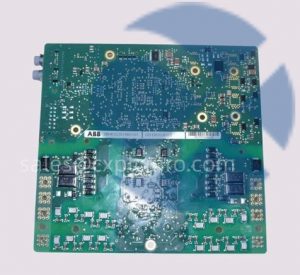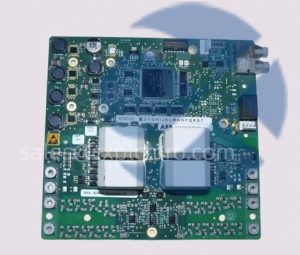
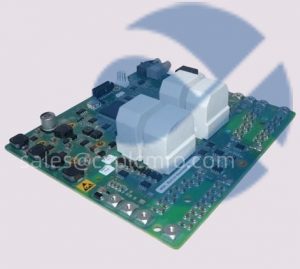
ABB GDD830 B105 (3BHE022678R0105) – High-Speed Digital Output Card for Power Conversion and Drive Control
In the field of industrial automation, core components of power conversion and drive control systems require high precision, fast response, and exceptional reliability. The ABB GDD830 B105 (model 3BHE022678R0105), a high-speed digital output card specifically designed for power conversion and drive control, has become a key component in improving the efficiency and stability of industrial equipment thanks to its outstanding performance. This article will comprehensively analyze its value from the perspectives of technical characteristics, application scenarios, fault diagnosis, and industry practices.
I. Technical Characteristics: The Perfect Integration of High-Speed Response and Multi-Channel Design
1. High-Speed Response Capability
The core advantage of the GDD830 B105 lies in its microsecond-level response time, ensuring precise timing control during power conversion. For example, when a variable frequency drive controls a motor, this module can quickly process control signals, keeping output delay to a minimum, thus avoiding motor jitter or efficiency reduction caused by response lag. After a steel plant implemented this module in its rolling mill production line, the motor start-stop time was reduced by 30%, significantly improving production cycle time.
2. Multi-Channel Digital Output Design
The module provides 16 independent digital output channels, supporting parallel control of multiple actuators. In complex industrial scenarios, such as robotic collaborative work or automated assembly lines, the multi-channel design reduces wiring complexity and lowers the risk of signal interference. A car manufacturer achieved synchronous control of welding guns, pneumatic clamps, and other equipment by integrating the GDD830 B105, resulting in a 25% reduction in system failure rate.
3. Wide Voltage Input Range and Electrical Isolation
The GDD830 B105 supports a wide voltage input range from 24V DC to 240V AC and incorporates built-in opto-isolation technology to effectively suppress electromagnetic interference. In high-voltage power conversion equipment, electrical isolation protects the control circuit from surge voltage impacts. After a photovoltaic power plant’s inverter system adopted this module, its operational stability during thunderstorms significantly improved.
II. Application Scenarios: Comprehensive Coverage from Power Conversion to Drive Control
1. Variable Frequency Drive Control
In variable frequency drive systems, the GDD830 B105 is responsible for converting control signals into the pulse sequences required to drive the motor. Its high-speed response characteristics ensure that the motor maintains a stable speed under dynamic loads. A chemical plant’s centrifugal pump system, by integrating this module, achieved precise flow control and a 15% reduction in energy consumption.
2. Automated Production Lines
In automated assembly lines, the module’s multi-channel output can simultaneously control robotic arms, conveyor belts, and detection sensors. After implementation by an electronics manufacturer, the production line cycle time was reduced from 45 seconds to 32 seconds, increasing productivity by 28%.
3. Power System Protection
In power conversion equipment, the GDD830 B105’s fast fault detection function can trigger protection mechanisms to prevent equipment damage. A substation’s transformer protection system, using this module, cut off the power supply within 0.5 seconds in case of overload, preventing major accidents.
III. Fault Diagnosis: Precise Localization from Symptoms to Root Cause
1. Common Fault Types
Abnormal output signal: Usually caused by interface oxidation or cable wear, which can be quickly located by checking the output waveform with an oscilloscope.
Communication interruption: Mostly due to incorrect bus protocol configuration; check terminal resistance and baud rate settings.
Module overheating: Long-term full-load operation may lead to poor heat dissipation; check fan speed and ventilation opening cleanliness.
2. Diagnostic Tools and Methods
Teach pendant diagnosis: Use ABB’s dedicated software to view module status and error codes in real time.
Logic analyzer: Capture bus protocol data packets and analyze whether the communication timing conforms to the standard.
Fault tree analysis (FTA): For complex faults, construct a logic tree of “signal transmission → protocol parsing → execution feedback” to gradually eliminate interfering factors.
IV. Industry Practice: User Feedback and Expert Advice
1. User Evaluation
“The modular design of the GDD830 B105 makes maintenance simple. The last module replacement only took 20 minutes, significantly reducing production line downtime.” – Equipment Supervisor, a power equipment company
2. Expert Advice
Selection points: Select the module model based on the load current (a 20% margin is recommended) to avoid overload operation. Installation Specifications: Shielded twisted-pair cables must be used, with a length not exceeding 50 meters, and kept away from strong interference sources such as frequency converters.
Preventive Maintenance: Clean the module interfaces quarterly and perform a bus protocol compatibility test annually.
V. Industry Trends: The Integration of Intelligence and Edge Computing
With the advancement of Industry 4.0, the GDD830 B105 is evolving from a single signal converter to an intelligent gateway. A research institution predicts that by 2026, 70% of industrial control modules will integrate edge computing capabilities. For example, this module can analyze vibration signals through built-in algorithms to provide early warning of bearing wear, improving fault prediction accuracy to over 90%.
VI. Conclusion: A Key Component for the Future
The ABB GDD830 B105 (3BHE022678R0105), with its high-speed response, multi-channel design, and electrical isolation characteristics, is a core component of power conversion and drive control systems. Its application not only improves equipment efficiency and stability but also drives the evolution of industrial automation towards intelligence and networking. For manufacturing enterprises pursuing lean production, investing in such technology is undoubtedly a cornerstone for building future smart factories.