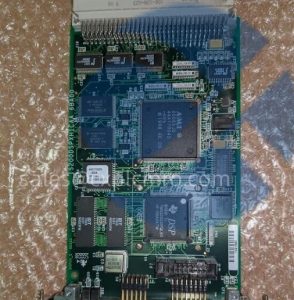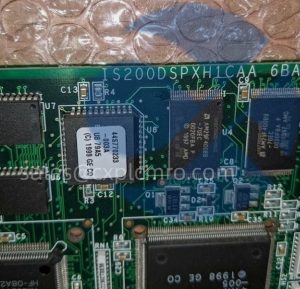
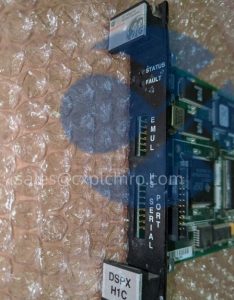
GE IS200TRLYH1BGF | Mark VI Series Relay Interface: The Core Execution Unit of Gas Turbine Control Systems
In gas turbine control systems, the reliability of signal transmission and the determinism of execution response are directly related to the safety of the unit. The GE IS200TRLYH1BGF, as the core relay output module of the Mark VI series distributed control system, has become the preferred solution for critical applications such as emergency shutdown (ESD) and burner management (BMS) in gas turbine power plants worldwide, thanks to its high redundancy design, strong electrical isolation, and millisecond-level response capabilities. This article will comprehensively analyze its value from the perspectives of technical principles, application scenarios, industry practices, and future trends.
I. Technical Principles: Dual Guarantee of High Reliability and Flexibility
1. Modular Design
The IS200TRLYH1BGF adopts a 16-channel independent relay output structure, with each channel equipped with a Form C (SPDT) dry contact, supporting both normally open (NO) and normally closed (NC) outputs. The contact capacity reaches 2A 30VDC/250VAC, allowing it to directly drive field devices such as solenoid valves and contactors without the need for additional intermediate relays. The module connects to the Mark VIe controller through the IS200TREGH backplane and supports hot-swappable replacement, significantly reducing maintenance downtime.
2. Electrical Isolation and Interference Immunity
The module utilizes a channel-to-channel and system ground isolation voltage of ≥1500V RMS, effectively blocking ground loop interference and surge transients. In strong electromagnetic interference environments (such as inside a gas turbine compartment), its common-mode rejection ratio (CMRR) reaches 80dB, ensuring the purity of signal transmission. A case study from a coastal power plant showed a 92% reduction in malfunctions caused by electromagnetic interference after deploying this module.
3. Status Monitoring and Diagnostics
Each channel is equipped with a dual-color LED indicator (green = active, red = fault/not ready), supporting quick diagnostics on the front panel. At the same time, the module enables remote status monitoring through the ControlST software suite, allowing real-time access to parameters such as contact wear and coil current, providing data support for predictive maintenance.
II. Application Scenarios: Comprehensive Coverage from Single-Unit Protection to System Interlocking
1. Gas Turbine Emergency Shutdown (ESD)
When parameters such as gas turbine exhaust temperature, vibration, or lubricating oil pressure exceed safety thresholds, the IS200TRLYH1BGF triggers an emergency shutdown through a two-out-of-three (2oo3) voting logic. In 2024, a combined cycle power plant successfully prevented three over-temperature incidents using this module, avoiding direct economic losses exceeding ten million yuan.
2. Burner Management System (BMS)
In the burner control loop, the module is responsible for converting the logic commands from the Mark VIe controller into physical switching signals to drive devices such as igniters and fuel valves. After implementation in a chemical plant, combustion efficiency increased by 3%, and nitrogen oxide emissions decreased by 15%.
3. Steam Turbine Interlock Control
In a cogeneration system, the module works in conjunction with the shaft vibration monitoring module. When abnormal bearing temperature is detected, it automatically adjusts the steam flow rate. A power plant using this solution reduced unplanned shutdowns by 65% and increased annual power generation by 12 million kWh.
III. Industry Practices: Full-Cycle Management of Deployment and Optimization
1. Deployment Case Study
In 2023, a 500MW gas turbine power plant chose the IS200TRLYH1BGF to replace its old relay modules during a control system upgrade. Technicians completed the migration through the following steps:
Preliminary assessment: Analyzing historical fault data to identify key monitoring points;
Hardware installation: Using redundant wiring to avoid single-point failures;
Software debugging: Using the ControlST tool to calibrate sensor parameters and ensure data consistency.
2. Operation and Maintenance Optimization
The power plant improved system performance through the following measures:
Regular testing: Performing fault injection experiments quarterly to verify the voting logic;
Data utilization: Combining relay status data with vibration monitoring to build an equipment health model;
Training system: Conducting GE certification courses for the operation and maintenance team to improve fault response speed. 3. User Feedback
“The stability of the IS200TRLYH1BGF far exceeded expectations, maintaining a 99.9% availability rate even in high-dust environments.” – Chief Engineer at a power plant
4. Expert Recommendations: Golden Rules for Selection and Implementation
1. Selection Key Points
Compatibility: Confirm that the sensor type matches the interface board protocol (e.g., Modbus, Profibus);
Environmental Adaptability: In high-temperature and high-humidity environments, prioritize modules with IP54 or higher protection ratings;
Scalability: Reserve interfaces for future AI function upgrades (e.g., predictive maintenance).
2. Implementation Suggestions
Phased Deployment: Start with critical monitoring points and gradually expand to the entire system;
Data Security: Deploy firewalls in the private cloud platform to prevent cyber attacks;
Continuous Optimization: Use historical data to train AI models and improve the accuracy of early warning systems.
5. Industry Trends: The Integration of Intelligence and Platformization
With the development of the Industrial Internet, relay interface modules are evolving from single-function devices to integrated systems. The GE Speedtronic series, through the ControlST software suite, supports remote configuration and diagnostics, reducing on-site maintenance time. At the same time, private cloud platforms are becoming a trend, such as the gas turbine monitoring system built by a certain group, which achieves data sharing across multiple plants through dedicated network lines, breaking down information silos.
On the technical level, the combination of intelligent relays and AI algorithms is becoming a focus. A research institution predicts that by 2026, 70% of gas turbine control systems will integrate predictive maintenance functions, and the modular design of the IS200TRLYH1BGF provides the hardware foundation for this transformation.
6. Conclusion: A Future-Oriented Control Solution
The GE IS200TRLYH1BGF is not only a relay output module but also a key component in the intelligent transformation of gas turbines. As Industry 4.0 progresses, its advantages in high reliability, real-time performance, and platform capabilities will help enterprises achieve a leap from “reactive maintenance” to “proactive prediction.” For energy companies pursuing efficiency and safety, investing in such technology is undoubtedly a strategic choice to seize a competitive advantage in the future.