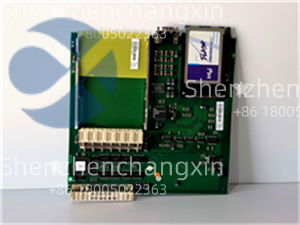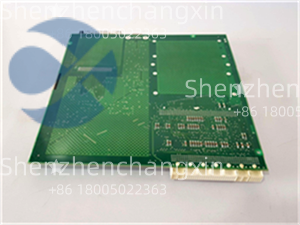
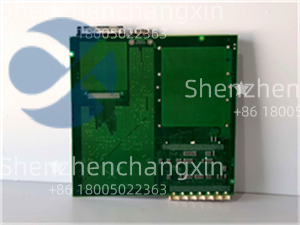
ABB RB520 3BSE022500R1 – A Cost-Effective Remote I/O Solution for Oil, Gas, and Water Treatment
In demanding industrial environments such as oil, gas, and water treatment, reliable data acquisition and equipment control are crucial for ensuring production safety and efficiency. The ABB RB520 3BSE022500R1, a remote I/O module specifically designed for oil, gas, and water treatment, is an ideal choice for distributed control systems due to its excellent protection rating, flexible communication protocol support, and cost-effectiveness. This article will delve into its value from the perspectives of technical characteristics, application scenarios, industry practices, and future trends.
I. Technical Characteristics: Reliability and Flexibility in Harsh Environments
1. Environmental Adaptability Design
The RB520 3BSE022500R1 features an IP67 protection rating enclosure, capable of withstanding extreme temperatures (-40°C to +70°C), high humidity, and corrosive gas environments. Its internal circuit board is treated with conformal coating, effectively preventing corrosion from salt spray, hydrogen sulfide, and other corrosive substances, ensuring long-term stable operation in offshore platforms, chemical plants, and other demanding environments.
2. Communication Protocol Compatibility
The module supports various industrial protocols, including Profibus DP, Modbus TCP, and EtherNet/IP, enabling seamless integration with PLC and DCS systems. For example, in a natural gas processing plant, the module connects to an ABB AC500 PLC via the Profibus DP protocol, transmitting pressure and temperature sensor data in real time with a response time of ≤10ms.
3. Modular Expansion Capability
The RB520 supports hot-swappable design, allowing users to flexibly configure digital input/output (DI/DO) and analog input/output (AI/AO) modules as needed. In one oilfield project, the expansion of eight AI modules enabled the collection of pressure and flow data from 12 oil wells, reducing wiring costs by 30%.
II. Application Scenarios: Comprehensive Coverage from Onshore Oilfields to Deep-Sea Platforms
1. Oil Extraction Monitoring
In onshore oilfields, the RB520 3BSE022500R1 is used for controlling the start and stop of oil pumps and monitoring wellhead pressure. 1. Optimization of Oil Well Pumping Cycles
After deployment in a western oil field, real-time data feedback was used to optimize the pumping cycles of oil wells, resulting in an 8% increase in daily production per well and annual electricity cost savings exceeding one million RMB.
2. Natural Gas Processing Plant Safety Interlock
In a natural gas purification plant, the module is linked with a combustible gas detector. When an excessive methane concentration is detected, it automatically triggers an emergency shut-off valve. After application in a Central Asian natural gas project, the accident rate decreased by 60%, meeting the SIL2 safety standard.
3. Water Treatment Plant Process Control
In a seawater desalination plant, the RB520 communicates with the SCADA system via the Modbus TCP protocol to control the flushing cycle of the reverse osmosis membrane modules. A Middle Eastern project using this solution extended the membrane module lifespan by 20% and reduced annual maintenance costs by 15%.
III. Industry Practices: User Feedback and Optimization Strategies
1. User Evaluation
“The modular design of the RB520 allowed us to expand our water treatment plant without replacing the core controller; we only needed to add I/O modules to meet the new process requirements.” – Technical Director of an environmental technology company
2. Common Problems and Solutions
Communication interruption: Usually caused by unconfigured terminal resistors or mismatched baud rates. It is recommended to use Profibus dedicated cables and install 120Ω terminal resistors at both ends of the bus.
Signal interference: When used near high-voltage frequency converters, shielded twisted-pair cables with single-ended grounding should be used. A chemical plant reduced the signal error rate from 5% to 0.1% using this method.
3. Preventive Maintenance Recommendations
Check the module appearance quarterly, cleaning dust and corrosive substances;
Measure the grounding resistance annually using a multimeter to ensure it is ≤1Ω;
Regularly back up configuration parameters to avoid accidental loss.
IV. Industry Trends: The Integration of Intelligence and Edge Computing
With the development of the Industrial Internet of Things, remote I/O modules are evolving from simple data acquisition to edge computing. ABB has launched an upgraded version of the RB520 that supports AI algorithms, allowing for local data preprocessing and reducing cloud transmission load. For example, in predictive maintenance scenarios, the module analyzes vibration signals to provide early warning of pump bearing wear, increasing the fault prediction accuracy to 85%. V. Expert Recommendations: Key Points for Selection and Implementation
1. Selection Guidelines
Environmental Matching: Prioritize IP67 protection rating in humid environments; confirm the module’s operating temperature range in high-temperature areas;
Protocol Compatibility: Select Profibus, Modbus, or EtherNet/IP protocol based on the existing system;
Expansion Requirements: Reserve 20% I/O capacity to allow for future process adjustments.
2. Implementation Steps
Preliminary Assessment: Draw a site equipment layout diagram to determine the distribution of I/O points;
Hardware Installation: Use standard DIN rail mounting, ensuring a module spacing of ≥5cm for heat dissipation;
Software Configuration: Use the ABB Automation Builder tool to import the GSD file and complete address mapping;
Testing and Verification: Test the module’s response using simulated signals to ensure data accuracy.
VI. Conclusion: A Future-Oriented Distributed Control Solution
The ABB RB520 3BSE022500R1 remote I/O module, with its high reliability, flexible expandability, and cost advantages, is a crucial support for digital transformation in the oil, gas, and water treatment fields. With the integration of technologies such as edge computing and AI, this module will further drive industrial automation towards intelligence and efficiency. For companies seeking a balance between production safety and efficiency, investing in such technology is undoubtedly a strategic choice for building a future intelligent factory.